VEHICLE’S COLOR MATCH FINDER
Enter your vehicle's year, make, and model below to find color matched paint:
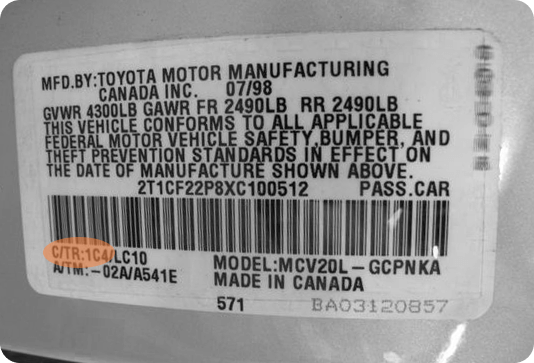
Vehicle paint color code can usually be found inside the driver's door jam. There are two sorts of paint codes listed: one for external paint and another for cabin or interior color.

Car paint does more than just add color and appeal to your vehicle; it's a critical layer of protection against the elements. Understanding car paint, including color codes, how to find them, and the importance of paint thickness, is essential for both maintenance and when assessing a car's condition. For enthusiasts and professionals alike, leveraging tools like our car paint finder tool simplifies the process of matching and identifying paint codes by just entering the make, model, and year of a car.
The Importance of Car Paint Color Codes
Each car's paint color has a unique code that manufacturers use to identify it. This color code is crucial for various reasons, from vehicle repair to customization, ensuring a perfect color match for touch-ups or repainting projects. Color codes eliminate guesswork, providing an exact match to the car’s original hue, preserving its aesthetic and resale value.
Color codes are not just about aesthetics; they play a vital role in maintaining the vehicle's integrity by ensuring any additions or repairs are seamlessly integrated with the existing paintwork.
How to Find Your Car's Paint Color Code
Locating your car's paint color code can seem daunting, but it's relatively straightforward with the right tools. Traditionally, color codes can be found in various places on a vehicle, including the door jamb, under the hood, or in the glove box. However, manual searches can be time-consuming and confusing due to the different locations across models and manufacturers.
This is where our car paint finder tool comes into play. By simply inputting your car's make, model, and year, you can quickly and accurately find out the paint codes specific to your vehicle, eliminating the hassle of manual searches and ensuring you get the exact color match for your car.
Understanding Paint Thickness on Cars
Paint thickness on a car is more than just an indicator of color depth; it reflects the vehicle's overall condition and history. A standard paint thickness is typically between 120 to 140 micrometers, which includes layers of primer, base coat, and clear coat. This thickness is essential for protecting the car’s bodywork from rust, chips, and UV damage.
Measuring paint thickness can reveal a lot about a car, including whether it has undergone significant bodywork or if it has been involved in an accident. Tools like paint thickness gauges allow for precise measurements, helping to assess the vehicle's condition beyond what is visible to the naked eye.
Signs of Damage Revealed Through Paint Inspection
A thorough paint inspection can uncover signs of past damage and repairs. Inconsistencies in paint thickness often indicate bodywork or repainting, suggesting the car may have been damaged. Moreover, variations in color or texture between panels can also hint at repairs, as it's challenging to match the original paint perfectly.
Other signs include overspray, which occurs when a vehicle is repainted without proper masking, leaving paint on unintended areas. Additionally, the presence of putty under the paint can indicate body filler use, commonly applied to dents or damaged areas before repainting.
Understanding these aspects of car paint, from color codes to paint thickness and damage signs, is crucial for any car owner, buyer, or enthusiast. It enables informed decisions whether you're maintaining a vehicle, planning repairs, or assessing a potential purchase. With tools like our car paint finder, matching and identifying paint codes has never been easier, ensuring your vehicle not only looks its best but also retains its value and integrity.


JOIN THOUSANDS OF PEOPLE USING VINDOCS
Get vehicle history report instantly.


Welcome to VinDocs. Here you can perform a VIN check to get the most comprehensive, insightful, and up-to-date car history report in the United States. Long gone are the days when it was nearly impossible to find a complete history of a vehicle.
TOOLS
COMMUNITY
COMPANY
SUPPORT
DECODERS BY MAKE
INFORMATION PAGES
VinDocs.com © All rights reserved 2026

