


WHAT WE CHECK FOR?
From local dealerships to global governmental databases, our extensive partner network ensures comprehensive coverage.
DAMAGES
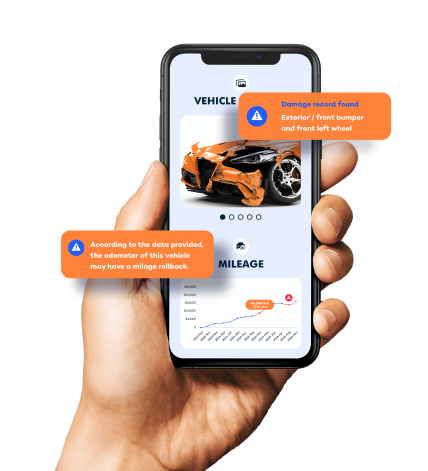
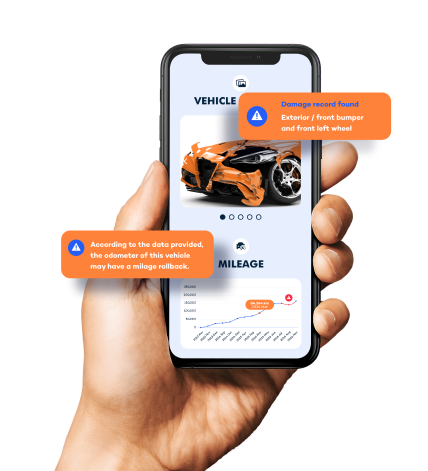
Hidden damages mean you might pay too much and your car could be unsafe.
MAINTENANCE HISTORY
Access complete service records to help you know your future car better and keep it running safely.
AVERAGE CAR PRICE
Find out what the car is really worth to help you negotiate a better deal and buy with confidence.
STOLEN CAR CHECK
We scan global and local law enforcement databases to confirm a car has a clean record worldwide.
MILEAGE ROLLBACK
Checking a car's real mileage helps to prevent overpaying and avoids costly repairs later.
CAR EQUIPMENT
Get all the details on a car's features and specs, so you know exactly what you're getting.
Scania is a Swedish maker of heavy trucks, buses, coaches and engines, founded in 1891 and based in Södertälje. It is part of the Volkswagen Group’s TRATON truck division. Its trucks are built in the P, G, R, S and L cab ranges, and its buses and coaches are sold all over the world.
How to read a Scania VIN
A Scania VIN has 17 characters in the international ISO 3779 format:
Characters 1–3 (WMI): the World Manufacturer Identifier, showing the Scania company and plant that built the vehicle.
Characters 4–9 (VDS): the vehicle descriptor section, which Scania uses to code the type of vehicle and its configuration.
Characters 10–17 (VIS): the vehicle identifier section. On Scania vehicles the last seven characters are the chassis number that Scania workshops use for parts and service records.
Unlike cars built for North America, European truck VINs don’t always use the 10th character for the model year. To find out how old a Scania is, use the date of first registration in the vehicle documents or the production date in the service records.
Scania World Manufacturer Identifiers (WMI)
YS2 – Scania commercial vehicles, Södertälje (Sweden)
YS4 – Scania buses and bus chassis built in Katrineholm (Sweden) until 2002
XLE – Scania Netherlands
VLU – Scania France
SZA – Scania Poland
9BS – Scania Brazil
8A3 – Scania Argentina
3AX – Scania Mexico (3BE for buses)
X8U – Scania Russia
Where to find the VIN on a Scania
Stamped into the chassis frame rail, usually near the front of the truck.
On the vehicle identification plate inside the cab, typically on the door pillar or near the passenger seat.
In the registration document and the vehicle’s service records.
Trucks and buses often have their bodies, cabs or engines replaced during their working life, so always compare the VIN on the chassis itself with the documents.
Why check a used Scania
Used trucks and buses often cover several hundred thousand kilometres and may have worked in several countries. A VinDocs report for a Scania VIN brings together the records available for that vehicle, such as mileage readings, damage and theft records and technical data, helping you spot rolled-back odometers, hidden accident damage or stolen vehicles before you buy.
Scania VIN DECODER FAQ
Here are some of the frequently asked questions about VinDocs Scania VIN decoder. For more information, click the button below.
What is a Scania VIN?
Scania VIN is a 17-character identification number that is attached to each car individually and only be used once. Each car in the planet has a unique identification number.
Where to find Scania VIN?
Scania VIN can be found under the front windscreen, on the side of the chassis, front door, on dashboard. The easiest place to find it is car documents. Always make sure that VIN on car matches with the one on the documents.
What Scania model works with VinDocs?
It works with all Scania models, that have a VIN number. We gather information from multiple sources and have the most data about Scania in the market.
Why getting a report before buying Scania is important?
By getting Scania report you prevent possible car odometer rollbacks, fluid damage or other hidden defects that could be hidden by the seller after an accident. Almost 20% of used cars has hidden defects or other flaws.

JOIN THOUSANDS OF PEOPLE USING VINDOCS
Get your Scania vehicle history report instantly.

Welcome to VinDocs. Here you can perform a VIN check to get the most comprehensive, insightful, and up-to-date car history report in Nigeria. Long gone are the days when it was nearly impossible to find a complete history of a vehicle.
TOOLS
COMMUNITY
COMPANY
SUPPORT
DECODERS BY MAKE
INFORMATION PAGES
VinDocs.com © All rights reserved 2026

