Is an Electric Car More Economical Than a Petrol Car?
- The Best Three Electric Vehicles of 2022
- Polestar 2
- Hyundai Ioniq 5
- Porsche Taycan
- How Much Does It Cost to Run an Electric Car?
- Upsides of Owning an Electric Vehicle
- • Energy Efficiency
- • Emission Reduction
- • High Performance With Low Maintenance
- Downsides of Owning an Electric Vehicle
- • Shorter Travels
- • Charging Logistics
- Final Thoughts

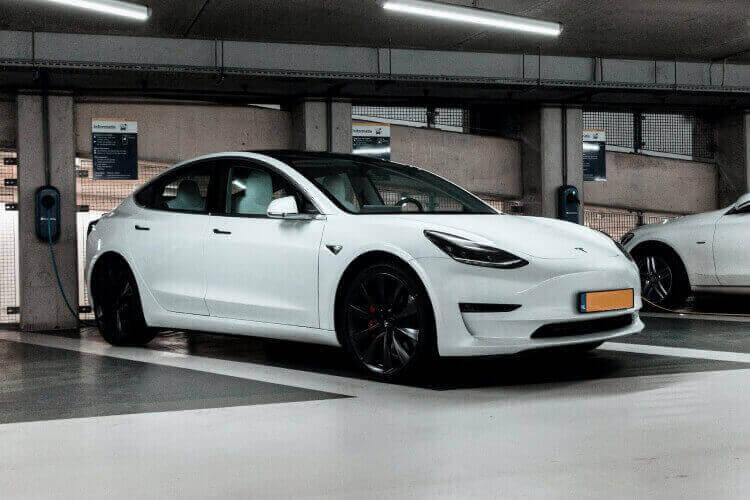
The biggest topic of conversation among customers looking for cars is whether to stick with a petrol model or go electric. There are pros and cons to either choice, as there are with any major decision. Ultimately, you will have to choose the best option for your life and situation, but we are here to help.
Here, we'll give you accurate, unbiased information about the financial impacts of owning an electric vehicle or a petrol car. We'll also highlight the best electric car on the market and discuss some of the pros and cons of owning an electric car. Keep reading to find out more.
The Best Three Electric Vehicles of 2022
The best three electric vehicles of 2022 come with a caveat: at the time of this article, the Tesla Model Y has been named Cars.com's best electric car of 2022. At the same time, the NHTSA has opened an investigation into 2021 and 2022 Model Ys for rapid deceleration (also called phantom braking) while using automated driving features. Due to this, we will not be including the Tesla Model Y even though it has received excellent recognition.
Polestar 2
A partnership between Volvo and their Chinese parent company, Geely, Polestar got its start in Sweden. The Polestar 2 is modeled on Volvo's popular XC40 line; it is a true sedan, but with the spacious cargo hold of an SUV. But the critical specs are regarding what it can do!
The Polestar 2 comes equipped with a 78kWh battery pack with 291 miles (470 kilometers) of range per full charge. The 408 horsepower engine can go from 0 to 60 mph in under five seconds. But what's even more impressive is the integrated Google Assistant, which takes most of the functionality hands-free. From navigation to phone calls, seat warmers to music, the Google Assistant has you covered. The Polestar 2 starts at $59,000, which is more than a gas or hybrid model but is considered reasonable for an electric car.
Hyundai Ioniq 5
Rather than the sporty, futuristic sedan of the Polestar 2, the Ioniq 5 is a midsize vehicle that is closer to a small SUV. The EV platform is exactly the same as the Kia EV6; you can choose to go with a 58-kWh battery, which comes standard, or you can opt to upgrade to a 77.4 kWh battery. If you choose a single electric motor, you're limited to rear-wheel drive, while the dual-motor design provides you with all-wheel drive.
The Ioniq 5 is Hyundai's first all-electric vehicle, but you wouldn't know it by looking! The larger battery is 225 horsepower, and the Ioniq 5 beats out the Tesla Model Y in a speed test, going from 0-60 in 4.7 seconds. It is the only model in the midsize range aside from the identical Kia EV6 that uses an 800-volt battery design, which supports ultra-fast charging at 350-watt fast-charging stations. Even in the dual-motor, 77.4 kWh battery AWD design, the Ioniq 5 exceeds the industry goal of 256 miles on a single charge with a distance of 270 miles. At the cost of $43,000-$54,500, it is among the more accessible all-electric vehicles from a price perspective.
Porsche Taycan
The Porsche Taycan is an all-electric sedan that is available in five trim levels and two different battery options. The 79-kWh battery pack is standard but can be upgraded to the 93-kWh battery that comes standard on the GTS and Turbo models. The base trim comes with a single motor, a two-speed transmission, and rear-wheel drive. The other trims include that second motor for all-wheel-drive capability.
The base model Taycan has a 321 horsepower engine. The 79.9-kWh battery gets an EPA-estimated range of 200 miles on a full charge, while the 93.4-kWh battery can go 225 miles per charge. In one test, the Taycan went from 0-60 in 3.6 seconds despite it weighing in at over 5,000 pounds! The starting price for the basic model is $84,000 and goes up to $186,000 for the highest trim and options. If that price sounds steep, remember that you're also paying for the Porsche name.
How Much Does It Cost to Run an Electric Car?
Electric cars are more expensive than their petrol-powered counterparts, to the tune of around $10,000 more. Keep in mind that there are tax credits available when you purchase an electric vehicle, up to approximately $7,500. There is a 4-cent per mile difference between owning a petrol-powered car and an electric vehicle, as of this writing. Electric vehicles have lower general maintenance costs than petrol cars, but when parts do fail, they can be expensive to fix. Over 200,000 miles, electric vehicles provide a savings of $8,000 over petrol vehicles, and in the long run, charging your car is less expensive than buying gas, especially if you have a long commute.
Upsides of Owning an Electric Vehicle
Like anything, there are pros and cons to choosing an electric vehicle over a petrol car. Let's look at the upsides first.
• Energy Efficiency
Electric car batteries convert between 59% and 62% of energy into vehicle movement, while petrol-powered vehicles only convert between 17% and 21%. Charging an electric vehicle's battery puts more energy toward actually powering the vehicle compared to filling a petrol tank.
• Emission Reduction
All-electric vehicles produce dramatically lower emissions than petrol cars. Driving an electric car with a rechargeable battery does not create any tailpipe emissions. Additionally, not having to rely on petrol means that you aren't releasing pollutants every time you fill your (nonexistent) fuel tank.
• High Performance With Low Maintenance
All-electric vehicles are high-performance vehicles. Their motors are smooth, quiet, and require less maintenance than internal-combustion engines. AEV motors are quick to react and are highly responsive with only a light touch.
Downsides of Owning an Electric Vehicle
• Shorter Travels
Electric vehicles have a shorter driving range than petrol cars. Most average 200 miles per charge, with some models getting nearly 300 miles per charge. Meanwhile, most petrol vehicles get 300 miles or more on a full tank of gas, while fuel-efficient and hybrid models have even better mileage.
• Charging Logistics
Fully recharging the battery pack of an electric vehicle can take up to 8 hours, and even fast charging stations take an average of 30 minutes to charge to 80%. When you drive an AEV, you have to plan your driving carefully to make the best use of charging stations.
Final Thoughts
Overall, all-electric vehicles, like any vehicle, must be assessed based on personal needs and vehicle usage. There are many pros to owning an electric vehicle, such as fuel savings and reduced emissions, but this can come at the cost of relying on battery charging and higher costs. Consider what works best for you when looking into purchasing an all-electric ride.


JOIN THOUSANDS OF PEOPLE USING VINDOCS
Get vehicle history report instantly.




JOIN THOUSANDS OF PEOPLE USING VINDOCS
Get vehicle history report instantly.
Welcome to VinDocs. Here you can perform a VIN check to get the most comprehensive, insightful, and up-to-date car history report in Australia. Long gone are the days when it was nearly impossible to find a complete history of a vehicle.
TOOLS
COMMUNITY
COMPANY
SUPPORT
DECODERS BY MAKE
VinDocs.com © All rights reserved 2026

